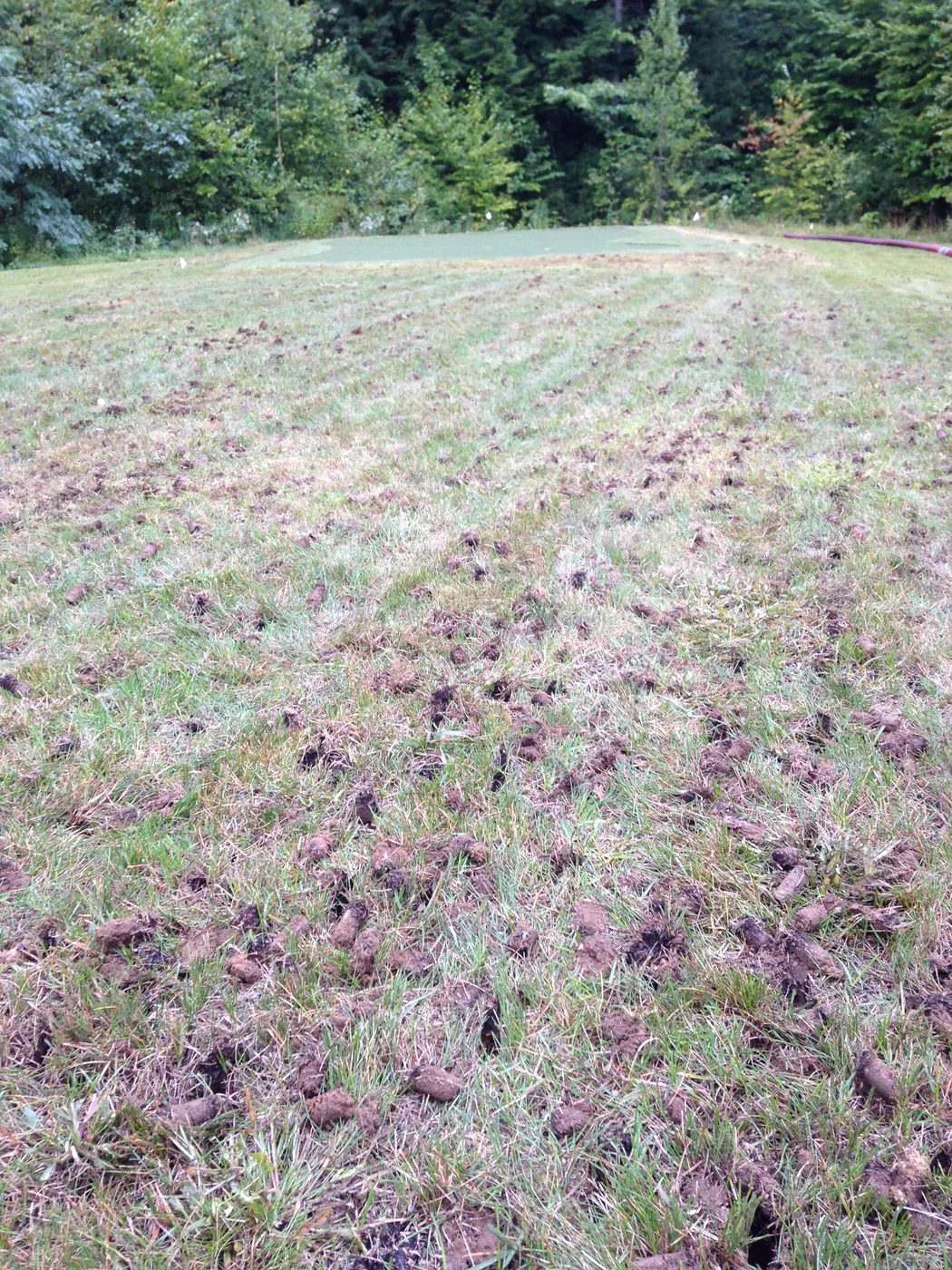
Core aeration opens pathways for air, water, and new seed.
Believe it or not, fall is just around the corner, which means one of my favorite times of year in lawn care is upon us! That's right, aeration and overseeding season is finally here, and I am absolutely thrilled about it! (I know, I know, "only Britt would get excited about punching holes in the ground.") Just hear me out on this one, because if there is one thing you can do this fall to set your lawn up for success in the spring, this is definitely it! Below I have everything you need to know about what we are doing, why we are doing it, and how you can assist in the process.
Why We Aerate
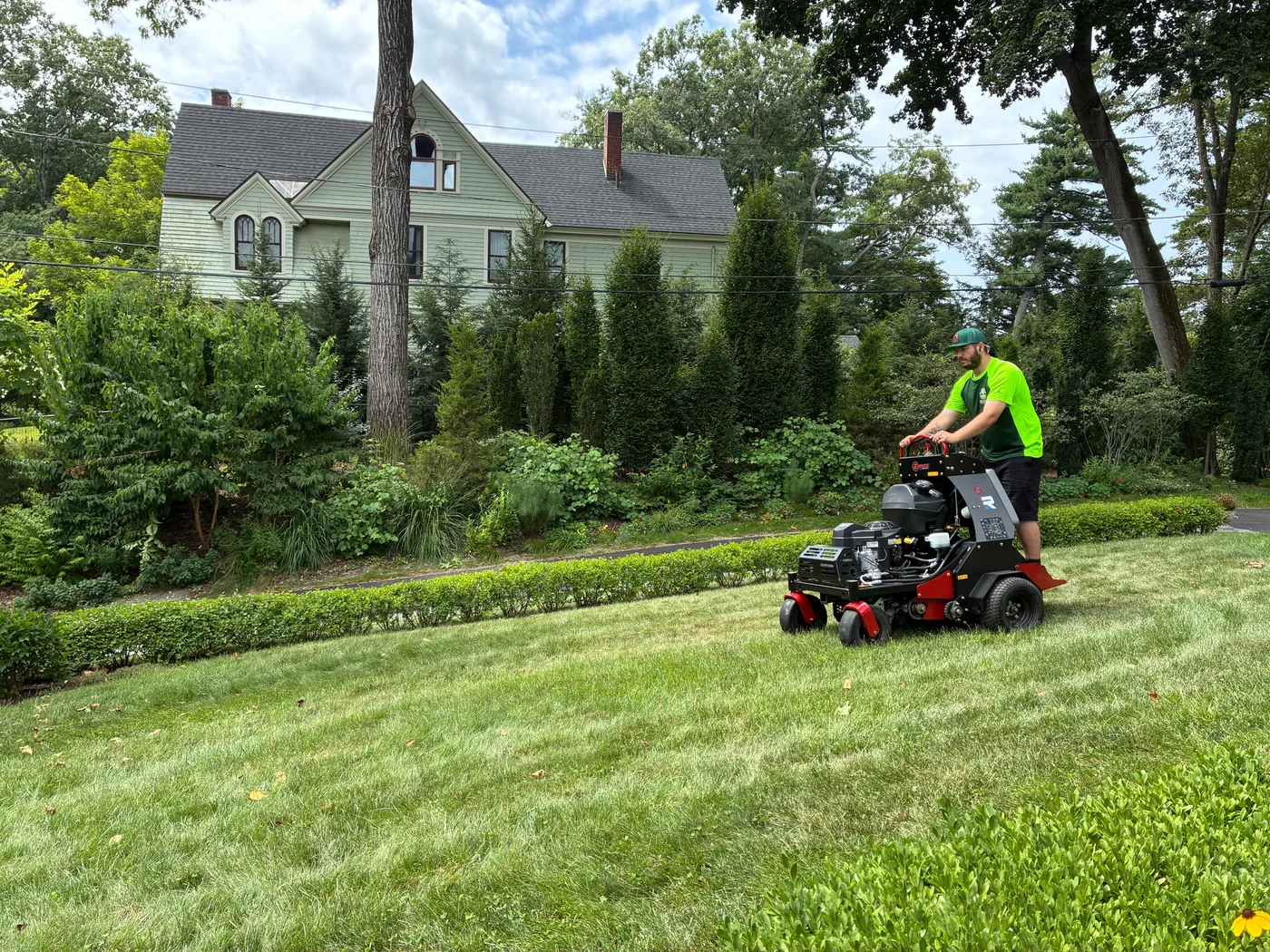
The Problem: Soil Compaction
Over time, from foot traffic, lawn equipment, even rainfall, your soil becomes compacted. Compacted soil is difficult for grass roots to penetrate and restricts air, water, and nutrients to the root zone, plus there are certain weeds that love growing in compacted soils like Broadleaf Plantain. It's very difficult for grass to thrive under these low oxygen conditions which is when the weeds say "yay!" and take over.
The Solution: Core Aeration
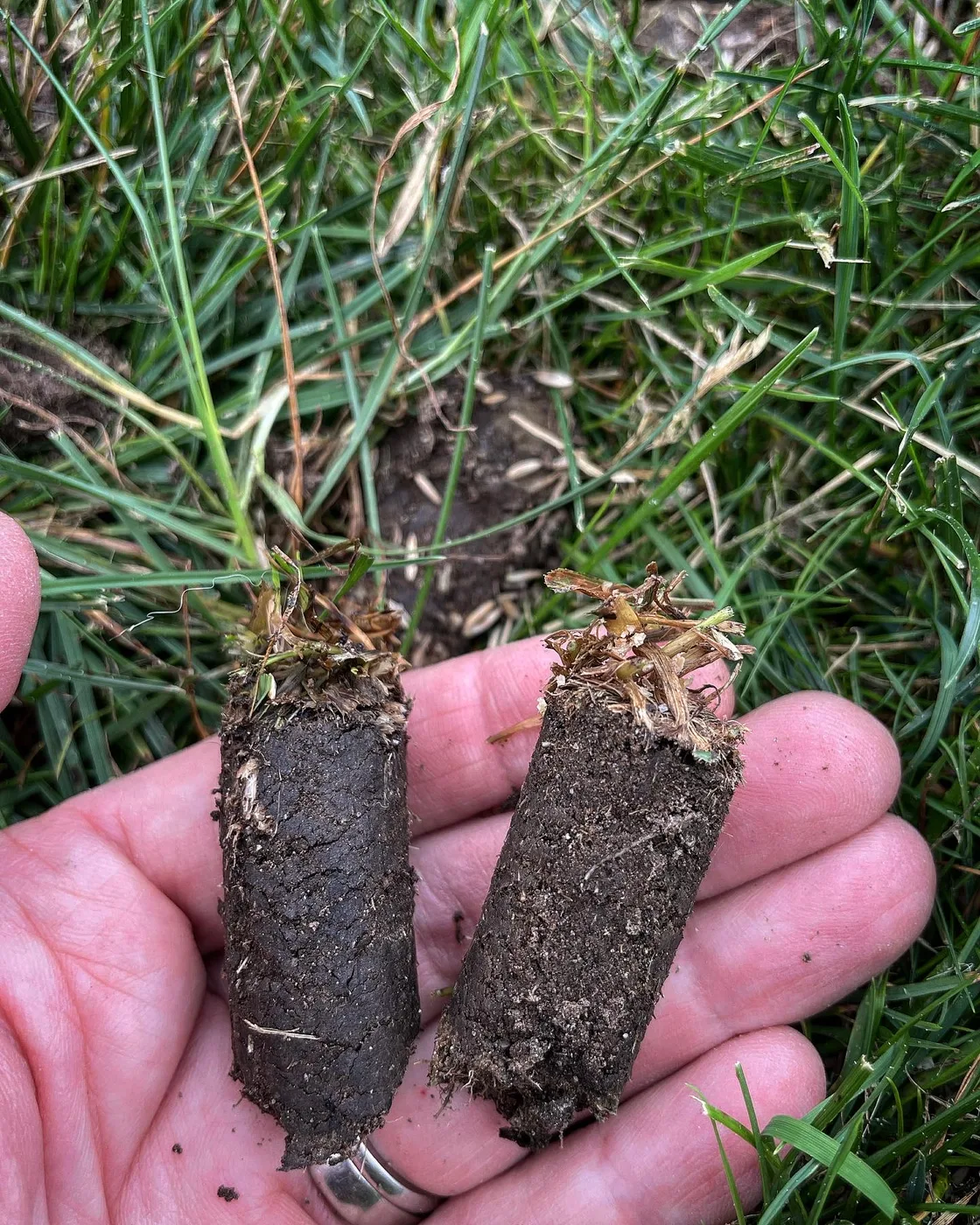
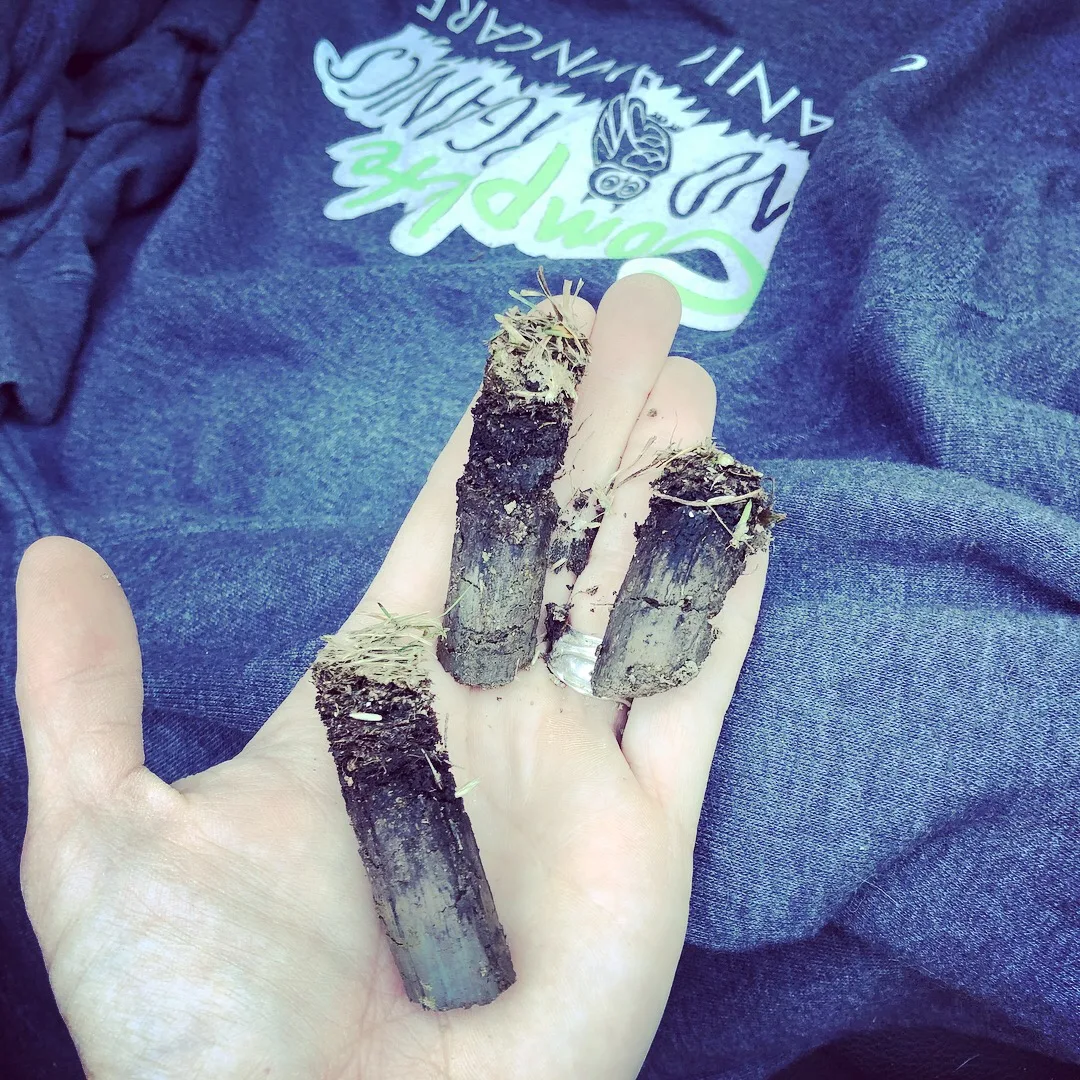
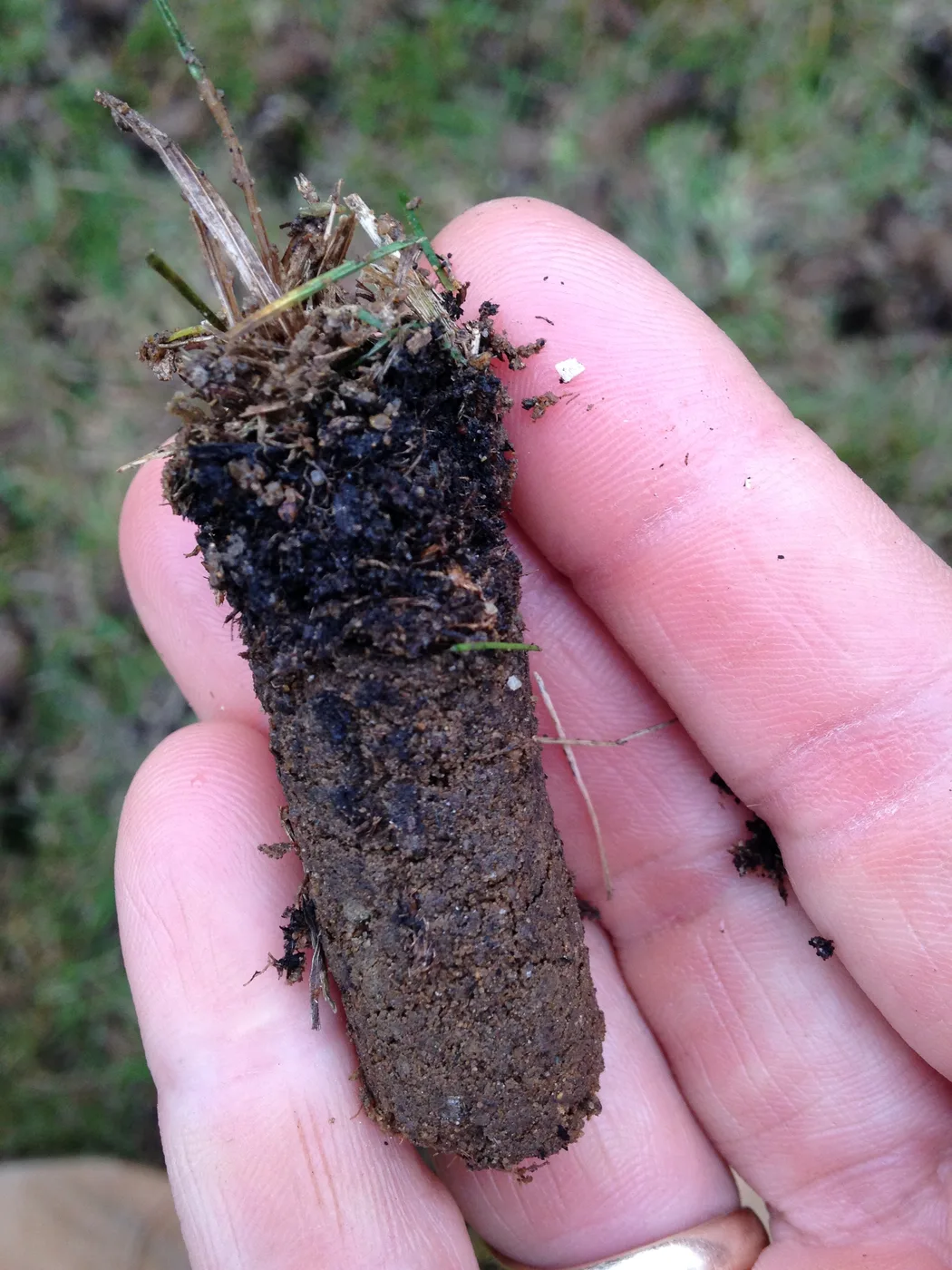
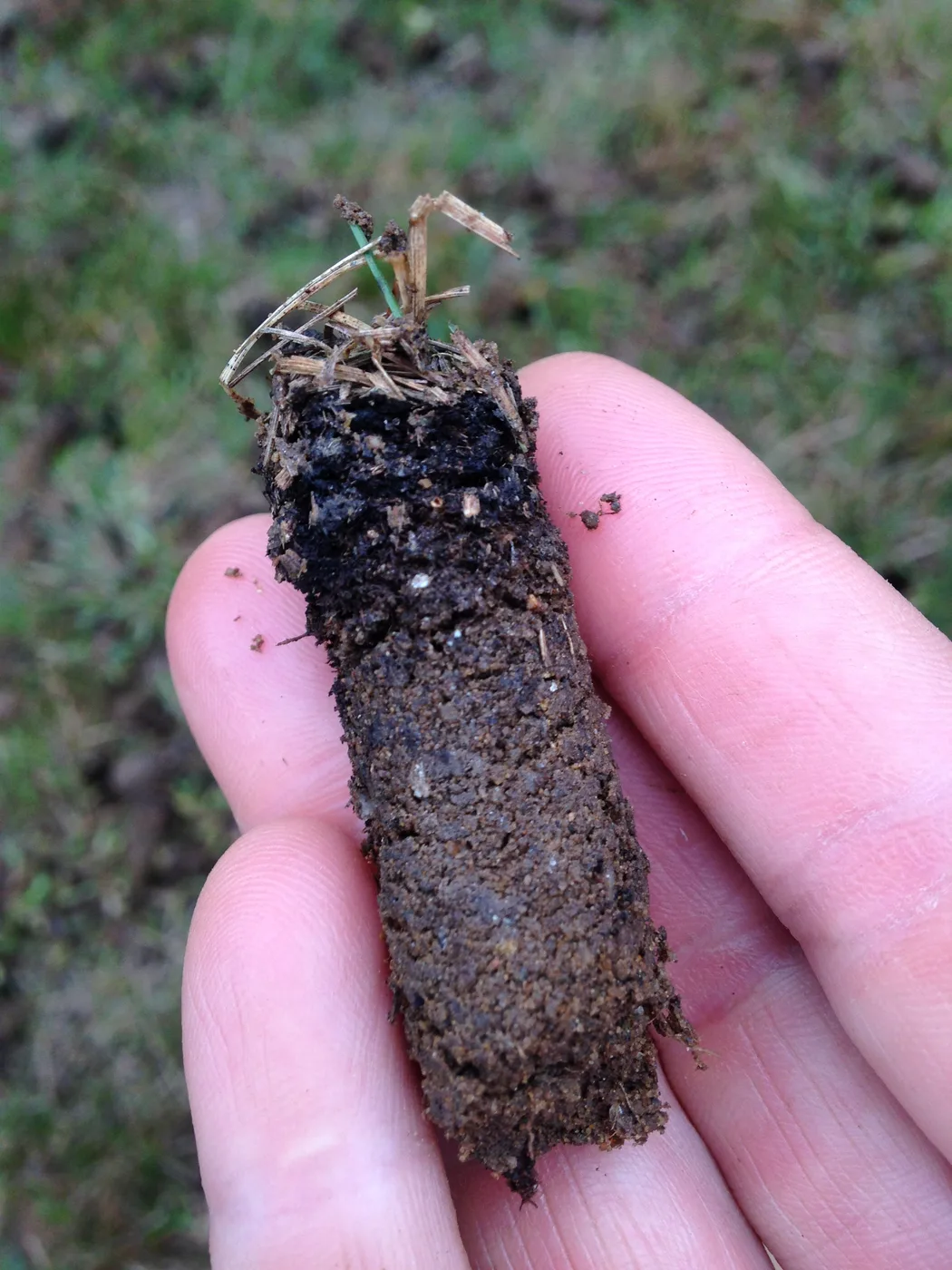
Core aeration utilizes an aerator to pull small plugs of soil from your lawn to create channels to allow air, water, and organic matter into the root zone. Those little plugs you are seeing on your lawn? Leave them! As they break down they create a wonderful seed bed full of soil biology that helps the seed to germinate. (Thank you in advance for fighting the urge to rake them up!)
Fall is by far the best time to aerate here in New Hampshire. Our cool-season grasses are coming out of summer stress and naturally have a period of increased root growth, so by giving the roots an open pathway to grow into right now we will have a robust root system going into the winter and a happier and healthier lawn come spring.
Why We Overseed
No matter how healthy your lawn is, grass plants die out over time. Summer heat stress, foot traffic, disease pressure, and even just the natural life cycle of the plant contribute to thinning areas and bare spots in your lawn. Overseeding introduces new grass plants to your lawn to fill in those bare spots before winter sets in so you can wake up in the spring and have more density than you went into it with.
We always overseed immediately after aeration, and it is no accident! Those open cores in the soil created by the aerator are perfect microclimates for seed germination. The seed falls directly into the holes, which then creates optimal seed-to-soil contact, and the seeds can stay moist to successfully germinate far better than if it was broadcast on compacted soil with a thick layer of thatch on top of it. Not only is Fall the perfect time of year for seed germination and establishment, the soil temperatures are still warm enough and the cooler air temperatures reduce stress on those delicate seedlings as they are settling in and establishing their root systems.
We use high-quality, regionally specific seed varieties that have been selected for drought resistance and performance here in New Hampshire's climate. No bargain bin filler seed here!
Water, water, water.
This is by far the most important thing to do after overseeding. New seed needs moisture, moisture, moisture to germinate. For the first two to three weeks, water lightly and frequently instead of deeply to keep the top inch of soil moist. If we get good rainfall, nature will take care of it for us. If it is dry, you are going to want to water once or twice a day in short bursts. Once you start to see germination (usually 7 to 14 days depending on variety) you can cut back and water more deeply and less frequently to encourage those young roots to grow downward.
Stay off the lawn if you can.
I know, I know, easier said than done if you have kids or dogs! But adding foot traffic to newly seeded areas can negatively impact germination and/or step on those delicate seedlings before they have a chance to establish. Try to avoid as much traffic as you possibly can for those first few weeks.
Hold off on mowing until the new grass reaches about 3.5 inches.
When you do mow, be sure to use sharp blades (dull blades will rip those tender seedlings right out of the ground) and only remove one third of the blade height at a time.
Leave those soil plugs alone!
The plugs from the aerator will look a little unkempt for a week or two, but try to fight the urge to rake them up and definitely don't suck them up with a vacuum system on a lawnmower, you'll also be sucking up all that new seed! The soil plugs are high in beneficial soil organisms and will break down on their own, adding organic matter back where your lawn needs it most.
I absolutely love aeration and overseeding season because the results really do speak for themselves. If you have any questions before or after your service visit, please do not hesitate to reach out. That's what I'm here for!