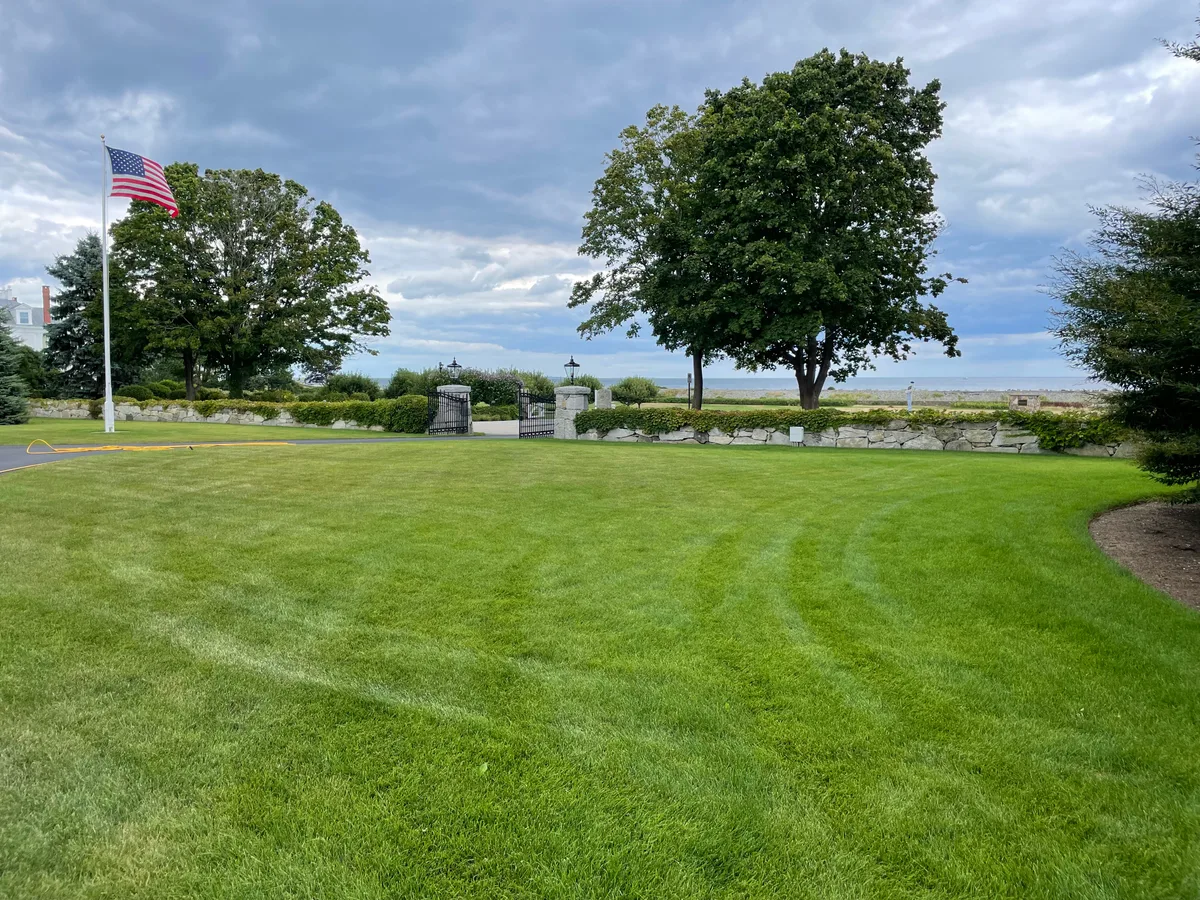
July sun on a Londonderry lawn is no joke. Homeowners who shaved the grass down to golf course height in May often call us when brown streaks follow the mower lines in August. The fix is not always more water or another bag of store bought fertilizer. Very often the first correction is simple: raise the deck and let blades of grass shade the soil like a living umbrella.
Why Short Cuts Backfire in New Hampshire Summers
Cool season grasses, the kinds most lawns in Nashua, Concord, and Portsmouth rely on, grow best when air and soil stay moderate. When you remove too much leaf at once, the plant has less surface to make food from sunlight. Roots shrink to match. Shallow roots cannot reach deep moisture when a dry week arrives. The crown, the part of the grass plant where new leaves form, sits closer to hot air and dries faster. Weeds that love bare, bright soil, such as crabgrass, get an invitation. Taller turf cools the ground, slows evaporation, and competes better with weeds without a spray bottle.
What Tall Cutting Means on a Homeowner Mower
Most residential mowers list height settings that do not match real inches. Use a ruler on a flat garage floor after you park the machine. Aim for roughly three inches after cut for typical Kentucky bluegrass, perennial ryegrass, and fine fescue blends common in Hillsborough and Rockingham Counties. If your lawn is mixed with shade tolerant fescue in a wooded section of Bedford, you might lean a touch higher in the thinnest spots. The goal is even height, not a perfect number on the sticker.
Mowing Habits That Help
- Remove no more than one third of the blade at any single mowing. If you return from vacation to tall grass, cut high once, wait two days, then cut again instead of scalping.
- Keep blades sharp. Torn leaf tips lose water fast and look pale even when soil moisture is fine.
- Vary patterns so tire tracks do not compact the same stripes all season.
- Leave clippings when they are short enough to filter down; they return nitrogen gently.
How This Connects to Organic Feeding
Organic fertilizers release nutrients in step with soil life and moisture. That partnership works best when grass has enough leaf area to capture sunlight and roots have room to breathe. If you are timing your first applications of the year, our post on the right time to start organic lawn care in New Hampshire pairs well with this mowing advice. Starting smart in spring makes summer mowing easier because the turf enters heat with depth already built.
Clients who want a written plan often begin with The Organic Review. We sample soil, review sun and shade, and note how you water and mow. Those details shape a program that fits your street, not a generic national schedule. Custom programs cover scheduled visits. Do it yourself programs keep you in charge of the mower while we steer product and timing.
Watering Without Waste
Longer grass reduces how often you must irrigate, but deep, occasional drinks still beat light sprinkles that only wet the tips. Early morning watering limits leaf wetness overnight, which matters in humid weeks around Derry or Salem when fungus can creep in. If your town restricts use during drought, taller turf buys time between allowed watering days.
Heat Stress Versus Insect or Disease Signs
Brown patches from dull mower stress often show straight lines. Random circles may be something else. When you are unsure, photos help. We can often narrow the cause during a site visit referenced from start here. Our about page explains how we approach land care, and the frequently asked questions page covers common summer worries.
Neighborhood Differences Worth Naming
A south facing slope in Windham dries faster than a flat backyard in Hooksett that sees only morning sun. Coastal air in Rye moderates temperature a bit compared to inland Strafford County lots that swing hot in July. Mowing height is a statewide principle with local tuning. We adjust recommendations when we know your microclimate and how you use the yard, kids, pets, parties, and paths all matter.
- Busy play lawns need a little extra height to recover from foot traffic.
- Formal front yards can stay tall and still look tidy if edges stay crisp.
- Transition zones between sun and shade benefit from the higher setting in the shade strip where grass is already weaker.
Organic care is not about ignoring summer stress. It is about stacking small advantages: height, sharp blades, soil tested feeding, and realistic watering. Together they keep color steadier without relying on synthetic growth pushes that fade when August arrives. Browse the gallery for lawns that weather heat with that approach, and read testimonials from families who wanted the same calm results.
If your mower deck still sits low from habit, raise it before the next cut and watch how the lawn responds for two weeks. Small mechanical changes often beat a panic purchase at the garden center. When you want professional backup, contact Complete Land Organics. We work across New Hampshire and welcome questions about summer mowing and organic lawn programs.